Halal-Certified Company
The Ultimate Guide to Planning a Flawless Event: Buffering, Portions, and Dietary Requirements
May 27, 2026 /
The Ultimate Guide to Planning a Flawless Event: Buffering, Portions, and Dietary Requirements
Whether it is an intimate family milestone, a baby’s full month celebration or a corporate seminar, hosting a successful event is no easy feat. One of the most critical factors of such an event is often a seamless dining experience.
When planning event catering in Singapore, hosts are often faced with a delicate balancing act. You want to ensure every guest leaves completely satisfied, yet you also want to practice mindful hosting by minimising environmental food wastage.
To help you navigate your next gathering with ease, our culinary and logistics teams have compiled the ultimate guide to mastering buffet portions, headcount buffering, and on-site food safety.
1. How Buffet Catering Portions Are Calculated
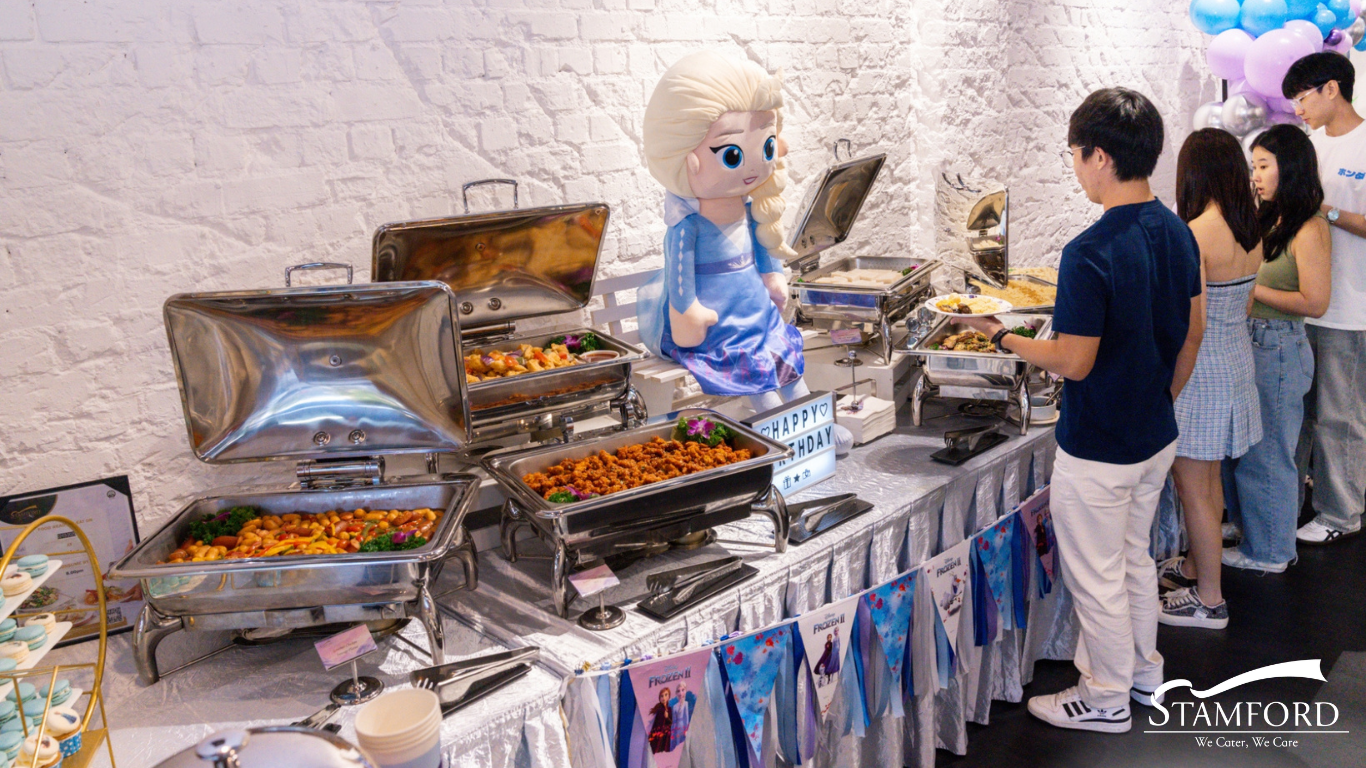
Professional buffet catering menus are carefully planned using established portioning guidelines and operational data. Each menu is calibrated according to the confirmed guest count to provide a well-balanced selection of proteins, carbohydrates, vegetables, sides, and desserts.
Modern buffet planning has also evolved. Instead of relying heavily on carbohydrate-heavy fillers, menus are now designed to deliver a more balanced dining experience that prioritises variety and portion control, rather than simply volume.
This structured approach supports both food quality and operational efficiency:
- Consistent Food Quality: Preparing food based on precise volume planning allows catering teams to maintain consistency in cooking, food presentation, and temperature control across large-scale central kitchen operations.
- Sustainable Catering Practices: Accurate buffet portion planning helps minimise unnecessary food wastage while ensuring guests are adequately served. This supports more responsible resource management and aligns with growing sustainability expectations in the catering industry.

2. How to Calculate Buffer Headcount for Event Catering Planning
While standard buffet portions are typically planned based on confirmed guest count, real-life events often require a degree of flexibility. Appetite levels can vary, and guest lists are not always fixed right up to the event day. This is where a buffer headcount becomes useful.
For example, at a family celebration for a child’s milestone, there may be additional last-minute guests such as plus-ones, children, or helpers who were not originally accounted for. In such cases, it is common practice to include a buffer of around 10%.
For corporate appreciation lunches, especially those held during peak lunchtime hours, guests are generally more likely to have larger appetites. In these scenarios, increasing the headcount allowance by 10 to 15% can help ensure food is sufficient throughout the event.
On the other hand, for lighter occasions such as high-tea receptions or mid-afternoon gatherings, a buffer may not be necessary, as guests typically consume smaller portions during non-meal hours.
Here’s a simple reference chart that you can refer to:
| Event Characteristic | Dining Behaviour | Catering Recommendation |
|---|---|---|
| Long Event Duration | Guests graze over 2-3 hours rather than eating a single meal. | Buffer the headcount or add extra side dishes. |
| Demographics | High ratio of young adults, athletes, or heavy eaters. | Increase the carbohydrate and protein portion buffer. |
| High Networking Events | Corporate seminars where guests talk extensively and eat slower. | Supplement the buffet with standalone live stations, finger food or canapes. |
3. How to Manage Dietary Requirements in Event Catering
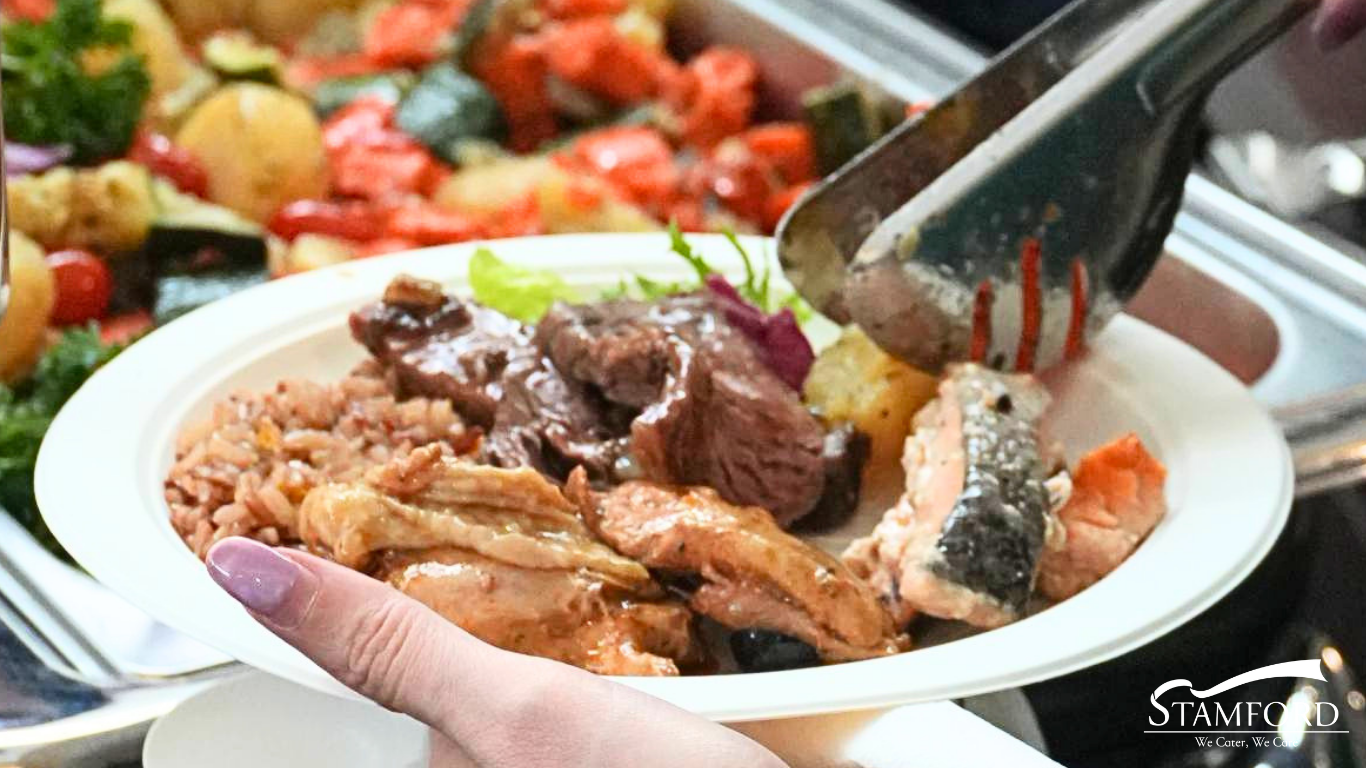
In Singapore’s multicultural workplace environment, accommodating dietary requirements is a key part of thoughtful and well-executed event planning. When sending out event invitations, it is best practice to include a clear deadline for guests to indicate any dietary preferences or restrictions.
Halal-Certified Assurance
Ensure your chosen caterer is fully Halal-certified so that Muslim colleagues and clients can dine with confidence and ease.
Vegetarian & Vegan Options
Include at least one to two well-balanced vegetarian dishes within the buffet spread, such as plant-based options or curated vegetable selections. Alternatively, request individually packed vegetarian bento meals for greater clarity and separation.
Allergen Considerations
Always communicate allergen requirements with your caterer in advance. This allows the culinary team to advise on suitable dishes and implement appropriate preparation measures, ensuring a safer and more reassuring dining experience for all guests.
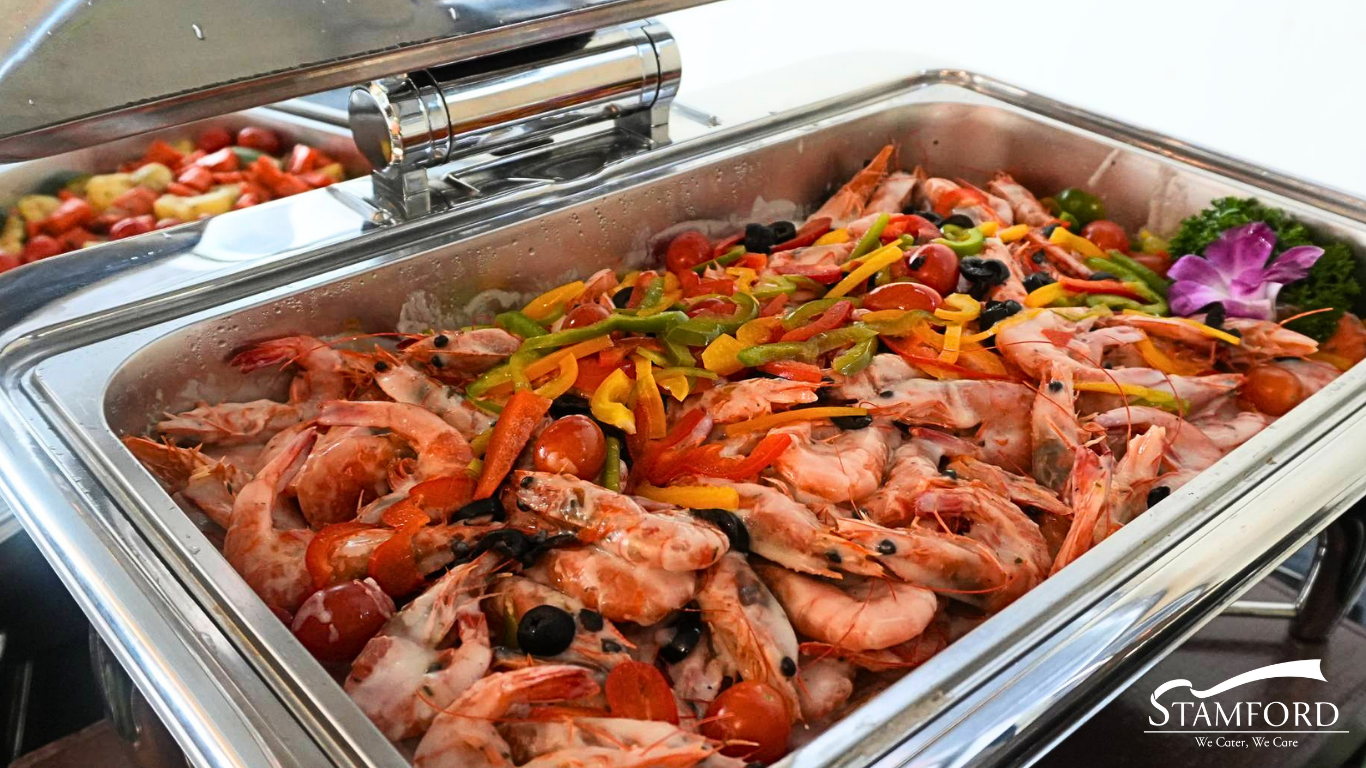
4. How to Keep Buffet Food Fresh and Safe During Events
Food safety considerations do not end once the delivery vehicle arrives. To ensure a safe and enjoyable dining experience from the first guest to the last, it is important to follow Singapore Food Agency (SFA) food handling guidelines.
Cooked buffet setups are carefully managed with strict time and temperature controls to maintain freshness throughout the service period. To support this, the buffet should be placed in a clean, well-ventilated area, away from direct sunlight or heat sources.
By working with an experienced and certified catering partner, and understanding how menu planning and service flow are managed behind the scenes, you can step away from logistics and focus on what matters most: connecting with your guests.